Last month, I had the opportunity to travel to Morzine, in the French Alps, to ski for a week with the South Jersey Ski Club, and then spend four days in Lisbon, Portugal, before returning home.
We stayed up to watch the Super Bowl, which ended at 4:30 am! Luckily, it was not hard to stay awake for that game! Apparently, I have to be on a ski trip in Europe in order for the Eagles to win the Super Bowl; I was there in 2018, but not there in 2022. I will make sure to book a trip, if they go to the Super Bowl again. We all have to do our part!
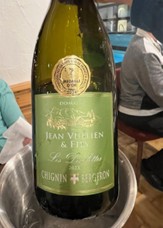
In the French Alps, we drank local wine with our dinners. The Savoie wine region of France is located in the French Alps, extending from Lake Geneva south to Isêre, below Grenoble. The region is known for some grape varieties that are rarely grown anywhere else, including Jacquère, Roussanne, Rousette, Gringet, and Mondeause.
My favorite white was “Les Divolettes,” a Rousanne produced by Domaine Jean Vullien & Fils from the Chignin-Bergeron appellation (Chignin is a town near Albertville, and Bergeron is a synonym for Roussanne). With stone fruits (peach, pear, apricot) and citrus (lemon, lime) on the nose, medium-bodied with nice acidity with a hint of honey on the palate, this paired very well with our trout and salmon dinners. It would also pair nicely with other alpine foods, such as cheese and sausages. 14% ABV I found it available online for about $22, imported by Regal Wines in NJ/PA/DE.

My favorite red that I tasted on the trip was in Lisbon, Portugal. On the night we arrived, we went on a food tour, which included a stop in the Mouraria (Moorish Quarter) at a Fado House called A Tasquinha Canto do Fado. I had octopus salad and bacalhau à brás (shredded salted cod with shoestring potatoes and egg) accompanied with a vinho tinto wine made by the restaurant owner’s local vineyard. The wine was a blend of Touriga Nacionale and Tinta Roriz, hearty yet well-balanced, with bright red fruit.
Often when I have a red Portuguese wine that has been imported to the USA, I think that it has had the “port treatment,” in that the red fruit seems cooked or oxidized, and tastes a little like port, rather than being bright and fresh. The red wine that I drank in Portugal was not that way at all, so I can only assume that importers must think that Americans want their Portuguese red wine to remind them of port. I hope that changes.
13.5% ABV. Only served in A Tasquinha Canto do Fado in Lisbon, sadly. I’ll just have to go back! Saúda!
 VinoBrief
Leave a comment