My older brother just moved from Oakland, CA to Albuquerque, New Mexico. Albuquerque is one of the highest cities in the United States, sitting at between 4,900 and 6,700 feet. The city is bordered by the Sandia Mountains on the east, the West Mesa to the west, with the Rio Grande running north-south, and Route 66 running east-west through the city. Mission Grape Vines were first planted in 1629 by Spanish Franciscan Friars and Capuchin monks along the Rio Grande. Now known as the Middle Rio Grande Valley American Viticultural Area, vineyards along the Rio Grande run from Sante Fe south to just below Albuquerque. In honor of his relocation, this is a compilation of my prior reviews of wines from New Mexico.
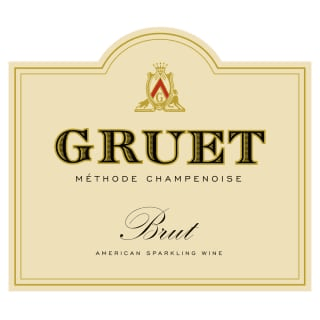
If you’ve been reading my column for a while, you know of my fondness for Gruet, the sparkling wine from New Mexico. Gruet Winery was founded by Gilbert Gruet and four of his adult children, who relocated to New Mexico from the Champagne region of France in 1984. Gruet makes its sparkling wine in the méthode Champenoise*. Even though its price increases every year, it’s still a steal at around $15 a bottle, available nearly everywhere.
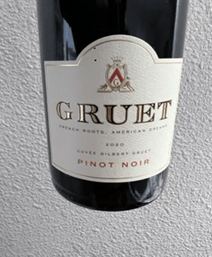
You cannot go wrong with their Blanc de Blancs (made from Chardonnay grapes), Blanc de Noirs (made from Pinot Noir and Pinot Meunier grapes), or their Brut Rosé. Some stores also carry their half bottles, which are nice to have on hand during the holidays, especially if your gatherings will be smaller than usual. And if you’re ever in New Mexico, try their still Pinot Noir; it’s amazing, and I’ve never seen it sold outside of New Mexico. My brother was able to find it at Walgreens, of all places! Gruet also has a tasting room in downtown Albuquerque, which I am looking forward to visiting when I go.
In 2021, while attending the American Wine Society Annual Conference in Atlantic City, I took a seminar on High Altitude New Mexico wines. I enjoyed a still Pinot Meunier rosé from Gruet Winery. I have never had a wine made solely from Pinot Meunier wine before (Pinot Meunier is often blended with Pinot Noir and Chardonnay to make Champagne).
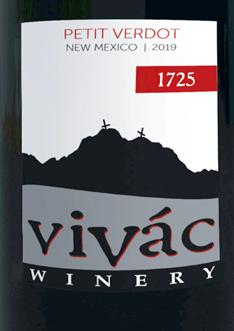
The unexpected surprise in the High Altitude New Mexico wines seminar was a tasty 2019 Petite Verdot from Vivác Winery. Vivác (meaning high altitude refuge) Winery is located at about 6,000 feet altitude in Dixon, NM, one hour north of Sante Fe and 30 minutes south of Taos. The high altitude means lots of sun during the day, dropping quickly to much cooler temperatures overnight (creates nice acidity). The winery is owned by brothers Chris and Jesse Padberg and their wives, one of whom, Michele, led the class. She poured their 1725 Estate Vineyard Petit Verdot from 2017.
Petit Verdot is generally used as a blending grape to add color and tannin, and can be a bit overwhelming on its own, but I was pleasantly surprised by this one. Aromas of bright cherries led to more cherries, resin, and firm tannins on the palate.
I’m looking forward to checking out these and other wineries in the Middle Rio Grande Valley AVA in person, hopefully in the fall. ¡Salud!
*Méthode Champenoise means that a secondary fermentation is done in the bottle by adding liqueur de tirage (a sugar, wine, and yeast mixture) into the bottle and capping the bottle with a cap. This secondary fermentation under pressure makes the bubbles. The bottles are placed in a wooden rack and riddled (slowly turned by hand over days until the bottle is nearly upsidedown). The top of the bottle is then frozen and uncapped, the dead, frozen yeast is disgorged, and the bottle corked and caged. Champagne, Cava, and Franciacorta all use the méthode Champenoise. In contrast, the Tank (or Charmat) method adds sugar and yeast to a large stainless steel tank of still wine, which is sealed to prevent CO2 from escaping during its secondary fermentation. The Tank method is a much cheaper method used for Prosecco and Sekt (German sparkling wine).
 VinoBrief
Leave a comment