A Second wine (second vin), or second label, is wine made from grapes that were not selected to go into a winery’s first label (Grand vin). These are still grapes grown on the same land as the grapes that are going into the Grand vin or first label, and being made into wine by the same technical team that is making the Grand vin, but they may be grapes from younger vines, or wine stored in the second best barrels, or not aged in barrel for as long. Or, if it wasn’t a great vintage, more grapes will be allocated to the second labelthan to the Grand vin (or none at all), to maintain the Grand vin’s quality. They are still delicious wines, and well worth seeking out for a taste of a Classified Bordeaux at a more reasonable price.
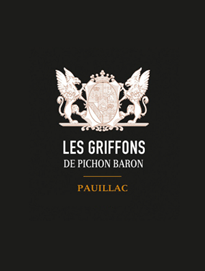
Chateau Les Griffons de Pichon Baron is the second label of Chateau Pichon Longueville Baron (“Pichon Baron”). It is one of fifteen châteaux classified as Second Growths (Deuxièmes Crus) in the original Bordeaux Wine Classification of 1855. The château is located in southern Pauillac, on the Left Bank in Bordeaux. With 60% Cabernet Sauvignon and 40% Merlot, this wine has typical Pauillac flavors of black currant, chocolate, espresso. Dense tannins will require airing before serving to soften. Available locally for around $47, compared to a Chateau Pichon Longueville Baron, available locally for $200.
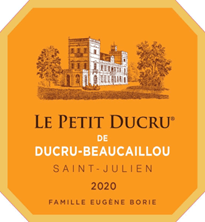
Château Ducru-Beaucaillou, another classified Deuxième Cru, is located in St. Julien, on the Left Bank in Bordeaux. Château Ducru-Beaucaillou holds a fond place in my heart: I shared a magnum of it with my friends after we ran the Marathon du Médoc in 2012. Their second label is La Croix Ducru-Beaucaillou, but their third label is Le Petit Ducru – St Julien (formerly called Château Lalande Borie). The wine is 60% Merlot and 40% Cabernet Sauvignon, with flavors of black and red currant, raspberries, cedar, tobacco, and herbs. The tannins are fine and soft. Found locally for $34, compared to $185 for the Grand Vin.
Not only Bordeaux wines have second labels: “Guidalberto” is Sassicai’s second label, “Overture” is Opus One’s second label, and “Jayson” is Pahlmeyer’s second label.
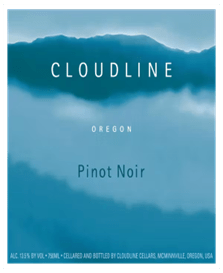
Two Oregon Pinot Noirs have their roots in French wineries. Cloudline is an entry-level Pinot Noir produced by Domaine Drouhin Oregon in the Dundee Hills (also of the famed Maison Drouhin winery in Burgundy). With flowers and cherry on the nose, with black cherry and cranberry on the palate, and a nice finish at this price point of $17 a bottle (compared to $40 for Domaine Drouhin’s Pinot Noir).
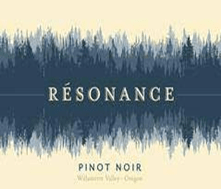
The second is Résonance, made by well-known Burgundian producer Louis Jadot. At $40 a bottle, it’s not cheap, but it’s a excellent example of what a complex Oregon Pinot Noir can be, coming in at #19 of Wine Spectator’s Top 100 wines of 2020. Ruby in the glass, with a beautiful nose of black cherry, blackberries, strawberries, peonies, and some licorice. More black cherry, blackberries, cedar notes, and some flintiness on the well-balanced palate.
Second labels take some research and patience to find, but they are well worth the effort.
Santé!
 VinoBrief
Leave a comment