While in the Basque region last August, we took a day trip to Haro, a city in the Rioja Alta, a subregion of the Rioja wine region. Haro is about an hour and a half drive South of San Sebastian, roughly the equivalent of driving from San Francisco to Napa. The drive takes you from lush green coastal Spain, tunnels through the Obarenes mountains, and deposits you into rolling brown countryside reminiscent of Sonoma County.
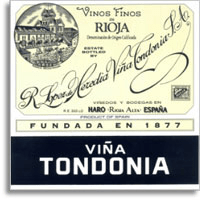
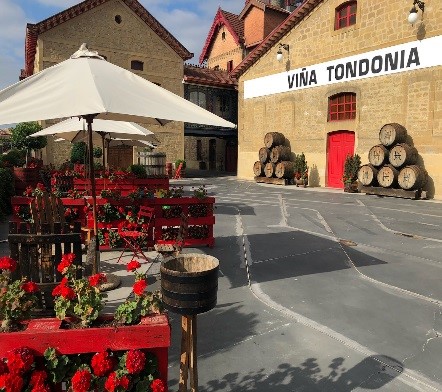
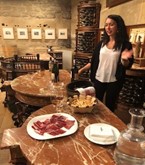
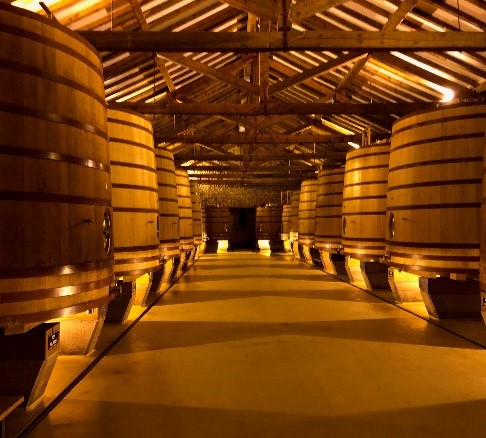
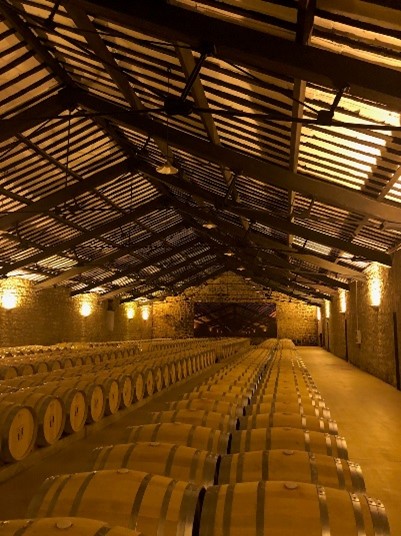
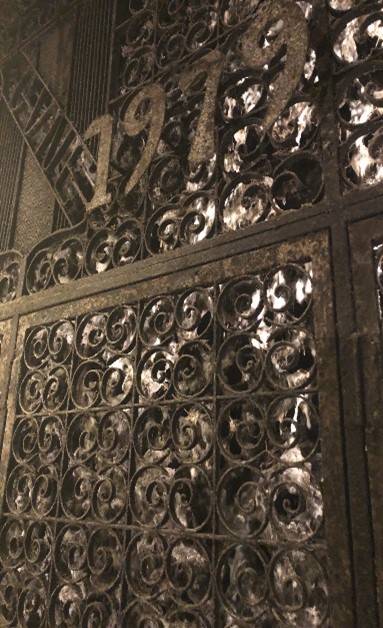
We began the day with a private tour at R. Lopez de Heredia, a bastion of traditional Rioja wines since its founding in 1877. While Phylloxera was wiping out the vineyards in Bordeaux, a Chilean wine student named Don Rafael Lopez de Heredia landed in Rioja by way of Bordeaux, and founded Haro’s first major winery. Our charming tour guide, Beatriz, escorted us from the crush room, through the massive wooden vats, some over 100 years old, through the barrel rooms 15 meters underground, filled with barrels still made on-site from American oak. She took us into the family’s “cemetery,” a wine storage room the family uses for private events, which contains hundreds of bottles collected over decades. We ended the tour in the tasting room, where Beatriz brought out a bottle of Rioja Blanco from 1977 as a treat for us. Opening such an old bottle is quite a production! The wine was almost sherry in character, and quite lovely. She also poured tastings from their different vineyards for us, ending with a Grand Reserva from their flagship vineyard, Viña Tondonia. She left us on their patio, with our plate of Iberico ham and basket of picos breadsticks to enjoy with our wine. Truly delightful. Wines from three of their vineyards, Viña Tondonia Reserva ($36), Viña Cubillo Crianza ($23), and Viña Bosconia Reserva ($33), are available from Wineworks.
We got back into the car (I was spitting!) and drove two minutes, around the Haro train station, to Viña Pomal, where we found a fantastic rosé for only €7. We should have bought a case of this to ship back, because it is not available outside of Spain or the UK.
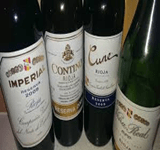
Our last stop was CVNE “Compañía Vinícola del Norte de España” which, in contrast to Lopez de Heredia, is made in a much more modern-style. CVNE was founded by two brothers of the Real de Asua family in 1879. Our tour was not private here, and even included two children. The highlight of the tour was the barrel room, one of the few remaining examples of Gustav Eiffel’s engineering design to avoid using pillars in wide buildings. CVNE makes several lines of wines, including CUNE (their first label had a misprint on it, and it stuck), Imperial, Monopole, Viña Real, and Contino. In addition to fermenting in oak barrels, CVNE also has giant concrete fermentation vats in the corners of their vat room. CVNE’s lines of wines are readily available in NJ (Wineworks has several from $10 to $25).
We finished our visit to Rioja in the charming medieval town of Haro, first mentioned in history in 1040, now famous for its Wine War every June 28-29th, where wine is spilled, tossed, and shot out of water guns, all over the revelers gathered to celebrate the feast days of Saints Peter and Paul. Salud!
 VinoBrief
Leave a comment